

How to create a newsletter with well-structured content

Newsletter marketing provides an excellent opportunity to make and maintain contact with potential as well as repeat customers. The goal of these newsletters is first and foremost to inform people, but many a time this objective is ignored and they end up being misused. They often contain more advertising than actual information, which leads to the recipient finding them spammy and annoying. When creating a newsletter, it’s important to develop a clear concept that maximizes readability and user satisfaction without losing sight of the original marketing purpose.
The foundations of a successful newsletter
What exactly constitutes a successful newsletter depends on the sector it’s being created for: an online store owner (in contrast to an association) can put more emphasis on their products, for example. In order to find the right balance between providing information and advertising, you first of all need to develop a comprehensive concept for your newsletter. It’s important to define the target group as well as the purpose of the newsletter. Take a moment to think about how you want to design the newsletter so that it actually gets the recipient’s interest and doesn’t just lie unnoticed in their inbox. Keep these points in mind when creating a newsletter:
- find an appropriate and appealing layout for your newsletter
- ensure a clear and interesting structure
- create exciting and informative content
- determine the perfect time to send out the newsletter
- analyze your readership with the help of relevant tools
More detailed tips and information on the various possibilities of newsletter marketing can be found in our article entitled Newsletter and E-mail Marketing.
- Intuitive drag and drop editing
- AI-powered text generation
- Multiple templates to choose from
Why good content is so important
A solid foundation for successful newsletter marketing involves developing a good strategy, acknowledging your target group, and being aware of the best times for dispatching the letter. And while a modern layout and reader analysis (using appropriate tools) are important factors, these are useless if the most crucial component is neglected: the content. You have to assume that you’re competing with ALL newsletters that land in the recipient’s inbox and not just the ones that offer the same products and services as your company. Many will be ahead of the game with sleek or elegant templates, some of which may be self-designed. It’s not often that the necessary time is invested for making great content, much to the disappointment of the customers. High quality texts and images are the best way of increasing interest in your newsletter and making your company stick out from the rest.
What should be featured in appealing newsletter content
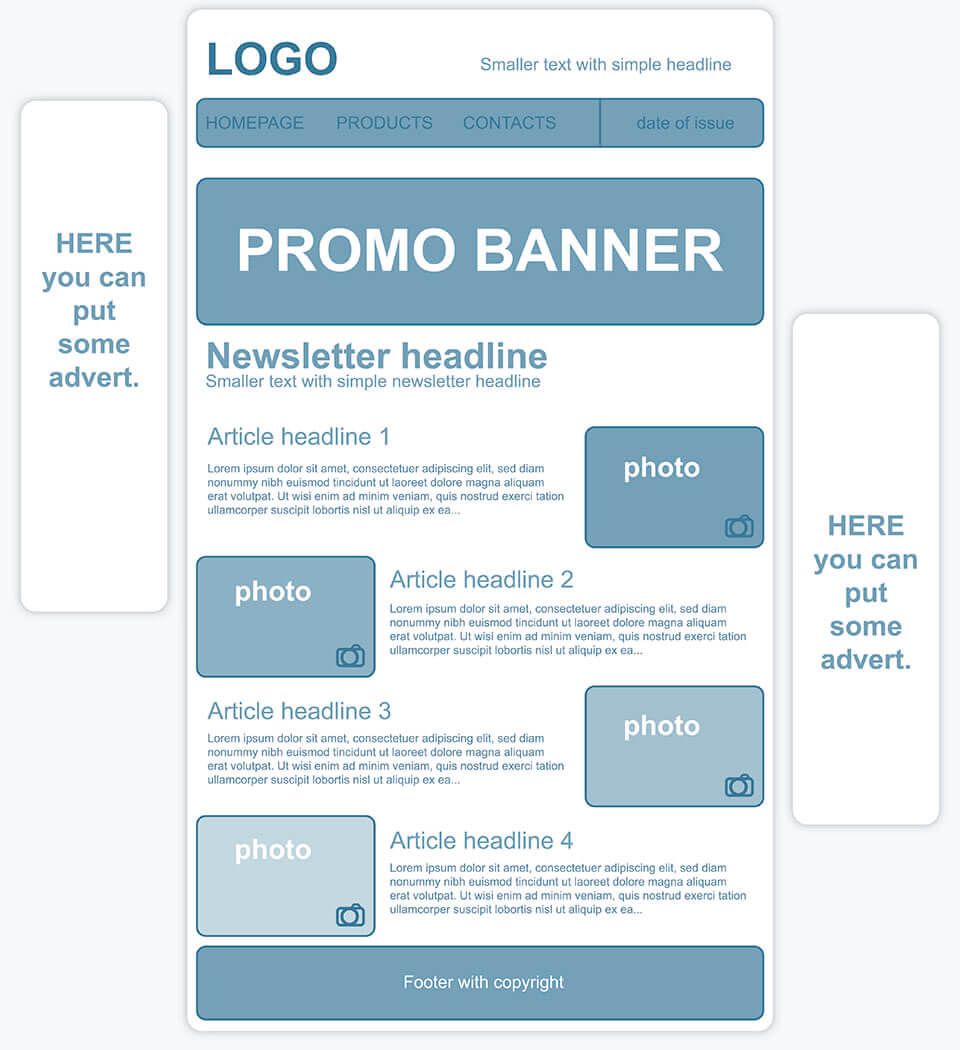
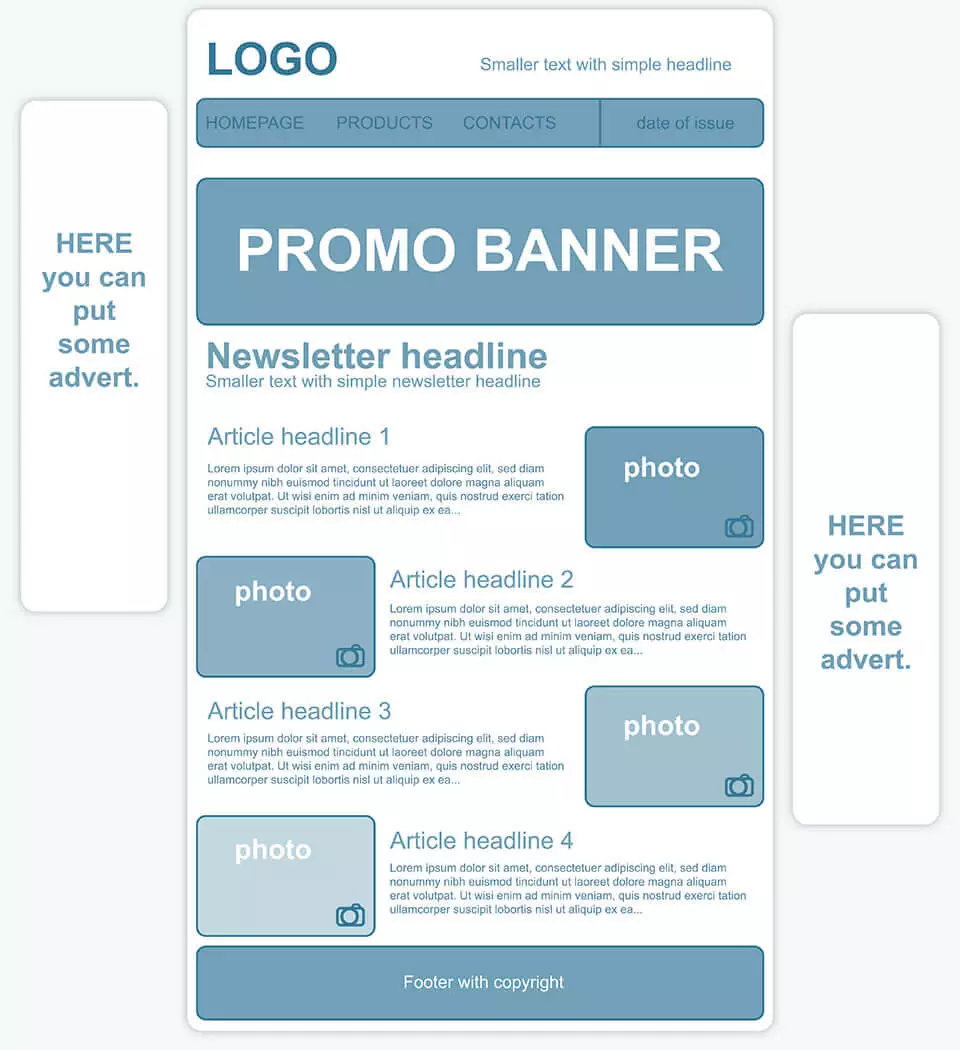
Just like with the basic concept, you should also set aside adequate time to properly develop your content. Research and plan topics with the long run in mind, but don’t forget to take current events into account, a move that adds value for your readers. With a good structure in place, you will find creating content to be a much easier task. Including the following aspects will help you to achieve your goals of creating suitable and effective content for your newsletter:
Style and structure
Always remember that you’re writing these newsletter for your readers. It’s important that you strike the right note. Make it clear to the readers that you’re an expert in your field, but don’t overdo it with technical terms or complicated facts. The more understandable the texts in your newsletter are, the higher the chances are that they will be read, which in turn leads to increased customer trust. The structure of your newsletter is equally as important. Structure your content in a way that includes meaningful titles and paragraphs. A good structure is important for the first impression and makes it easier for the customers to grasp the content.
Images
Photos and graphics are a simple way of improving the aesthetics of your newsletter. In comparison to mere descriptions of what’s on offer, high quality photos can give a personal touch to your company and its products and services. Images can also be used to break up text passages, but first make sure that you have the rights to use the images.
Scope
Regardless of whether you want to include a text or an image, you have to make sure that you don’t go overboard. Your aim should be to have a consistent design with a limited number of small blocks of texts and images. If you own a blog, it makes sense to write a short summary of your most recent posts and include them in your newsletter with a link to the blog. The situation is similar for infographics: present an excerpt in your newsletter and link it to the full graphic. You should always check the file size to make sure it loads quickly and doesn’t end up in the spam filter.
Optimization for all appliances
What applies to websites, also applies to newsletters: gone are the days of dealing with your business solely on your desktop PC. Many users regularly access their e-mails on tablets or smartphones, which means it’s essential that your newsletter is designed to be compatible with mobile appliances as well. Excess or misplaced line breaks and huge images, which can only be viewed on large monitors, turn customers off and come across as unprofessional. Read more on that here in our article about Newsletter Templates.
Interesting and relevant topics
Two aspects play a special role when it comes to the choice of topic: creating a personal touch to your company and relevance for the reader. Interesting short stories, anecdotes, or powerful quotes are excellent introductions for your newsletter and make the reader want to find out more. It’s up to you to decide how often your products or services appear in the newsletter. It’s recommended that no more than a fifth of the newsletter should comprise of advertising. You could apply this to every newsletter or decide that every fifth edition will be solely advertisements. Other clever ways of indirectly integrating your product include discount campaigns and competitions. At the very end, come up with an interesting and powerful subject line for your newsletter. Bear in mind that your e-mail address and the subject line are often the only elements that the recipient sees, so they need to stand out to ensure that the newsletter is opened and read.